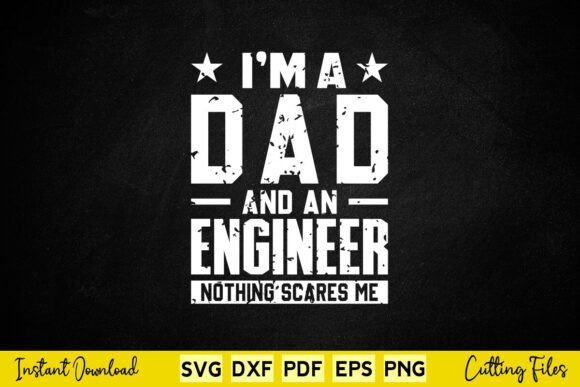
I Am a Dad and an Engineer SVG Cut File
A Designer’s First Look: Clean, Confident, and Immediately Relatable
When I opened I Am a Dad and an Engineer SVG Cut File, my first thought wasn’t about stitch count or file structure—it was about resonance. The layout is balanced: two strong identity statements stacked with clear hierarchy, no excessive ornamentation, and just enough visual weight to hold attention without overwhelming. It reads like a quiet declaration—not flashy, but grounded. As a designer who regularly selects embroidery files for boutique clients and small craft businesses, I immediately pictured it stitched onto a heavyweight cotton sweatshirt for Father’s Day, or cleanly centered on a linen kitchen towel in a modern nursery shop.
Where This Design Truly Shines in Real Embroidery Projects
I Am a Dad and an Engineer SVG Cut File fits naturally into projects where authenticity and clarity matter more than complexity. Think embroidered tote bags for engineering school alumni events—durable canvas, medium-density fill stitch, minimal thread breaks. Or baby onesies: the clean letterforms avoid tiny serifs or thin connectors that vanish at 3-inch hoop scale. On a structured cap front, the design’s horizontal emphasis and moderate height (no tall ascenders crammed into tight curves) make it far more viable than many text-heavy SVGs meant only for flat surfaces.
It also works well for custom apparel sold by Etsy sellers and handmade shops—especially when paired with thoughtful fabric choices. A midweight French terry hoodie? Yes. A crisp cotton apron for a maker-space gift set? Absolutely. Even as a simple embroidered patch sewn onto a denim jacket, the message lands with warmth and professionalism. That dual-identity phrasing—“Dad” before “Engineer”—gives it emotional texture, not just occupational labeling. Customers notice that nuance.
Where to Proceed With Intentional Care
This isn’t a one-size-fits-all embroidery file—and that’s a good thing. Its strength lies in its simplicity, but that also means certain applications need extra attention. On stretchy fabrics like jersey or lightweight knits, stabilizer choice becomes critical: a cutaway + tear-away combo prevents letter distortion during stitching and wear. On dark fabric, especially charcoal or navy, test your thread colors thoroughly—some off-white or light gray threads lose legibility against deep backgrounds. And while the design avoids ultra-thin lines, the inner counters of letters like “a” and “e” can close up if stitch density runs too high or if low-quality thread is used.
Don’t assume it translates seamlessly to curved surfaces like baseball caps or toddler beanies without testing. The lack of intricate flourishes helps, but the width-to-height ratio still demands careful digitizing adjustments for those surfaces—unless you’re using it as a pre-digitized machine embroidery design (in which case, verify the vendor’s cap-ready version separately). Also, avoid scaling it below 2.5 inches wide: the kerning and spacing were clearly designed for readability at standard apparel sizes, not micro-embroidery.
What It Adds to Your Finished Product—Beyond the Stitch
Using I Am a Dad and an Engineer SVG Cut File elevates perceived value because it feels intentional—not generic clip art. Handmade product buyers respond to sincerity, and this phrase carries quiet pride without bravado. For craft business owners, it supports brand consistency across product lines: same message, different formats (tote, pillow cover, tea towel), all unified by tone and execution quality. It boosts giftability—especially for milestone moments like baby showers, graduations, or retirement gifts—because it speaks directly to identity, not just occasion.
From a commercial embroidery standpoint, it’s low-risk for repeat orders: customers rarely request revisions on clean, well-proportioned text layouts like this. And for digital product sellers listing on Etsy or Creative Market, pairing this SVG with realistic printable mockups (light/dark fabric variants, multiple garment angles) increases buyer confidence significantly.
Practical Embroidery Designer Notes You’ll Want to Keep Handy
- Always test first: Run a sample on scrap fabric matching your final project’s weight and texture—even if it’s just one word. Watch how the “D” and “E” anchor, and whether the space between lines stays open.
- Check contrast early: View your thread palette against both light and dark fabric swatches in natural light—not just on screen.
- Review stitch density: If you’re converting this SVG into a machine embroidery design yourself, avoid overloading fill areas. Moderate density preserves softness on apparel and reduces wear on home embroidery machines.
- Hoop size matters: Estimate your final dimensions before hooping—this design scales well, but going too large on textured fabric (like terry cloth towels) may require repositioning mid-stitch.
- Stabilizer isn’t optional: Use cutaway for knits, medium-weight tear-away for stable wovens, and consider topping for fuzzy fabrics like fleece or sherpa.
- Licensing check: Since this is a digital embroidery file sold for Crafts and Graphics use, confirm whether the license permits commercial embroidery (e.g., selling finished embroidered sweatshirts) or resale of derivative digital products—don’t assume.
Final Thought: A Quiet Workhorse, Not a Showstopper
I Am a Dad and an Engineer SVG Cut File won’t win design awards for innovation—but it doesn’t need to. It succeeds by doing exactly what it promises: communicating a meaningful, human-centered identity with clarity and dignity. In a market flooded with overdesigned, trend-chasing graphics, its restraint is its reliability. Whether you’re stitching a single personalized gift or producing fifty embroidered patches for a university engineering department, this file earns trust—not through flash, but through consistent, thoughtful execution. That’s the kind of design that keeps craft business owners coming back, project after project.