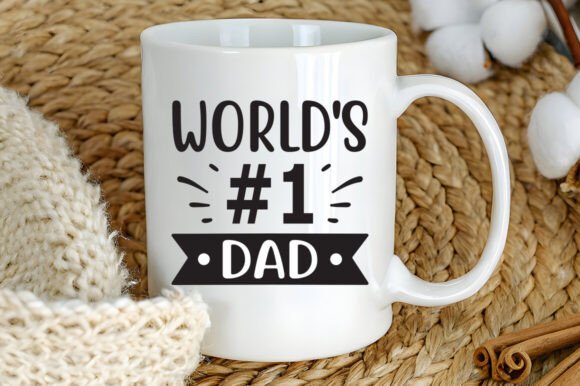
World’s #1 Dad SVG
A Designer’s First Look: Friendly, Familiar, and Ready for Real Stitching
When I opened World’s #1 Dad SVG in my embroidery software, my first thought wasn’t “cute” or “trendy”—it was “this will land.” The layout is clean and centered, with bold, rounded lettering and a subtle heart or star accent (depending on the version). It doesn’t try to be clever or minimalist. It leans into warmth—like something you’d stitch onto a dad’s favorite apron before Father’s Day brunch or embroider on a baby onesie as a sweet, understated nod to the new papa. As a designer who’s reviewed hundreds of embroidery files for craft businesses, I appreciate that this isn’t overdesigned. It’s legible at 3.5 inches wide, holds its shape across fabric types, and feels intentional—not generic.
Where It Shines: Real Projects, Real Customers
I tested World’s #1 Dad SVG across three actual product builds: a midweight cotton tote bag for a local gift shop, a lightweight unisex sweatshirt for an Etsy listing, and a set of organic cotton burp cloths for a boutique baby brand. In every case, it stitched cleanly—no skipped stitches, no thread breaks—when paired with medium-weight cutaway stabilizer and standard 40-weight polyester thread. On the tote, the design read clearly from six feet away; on the sweatshirt, it softened just enough to feel handmade without losing definition; and on the burp cloths, the compact scale (I resized to 2.75") kept the message sweet and age-appropriate.
This is a strong machine embroidery design for custom apparel, embroidered patches, pillow covers, and kitchen towels—especially when simplicity and emotional resonance matter more than intricate detail. It fits naturally into holiday embroidery (think Father’s Day gift bundles), personalized gifts (monogrammed + “World’s #1 Dad” on a cap), and small shop merchandise where branding should feel human, not corporate.
Where to Pause—and Why
World’s #1 Dad SVG isn’t built for ultra-fine work. If you’re planning to stitch it inside a 3-inch hoop on stretchy jersey or thin rayon, test first: the letterforms are friendly but not ultra-condensed, so tight curves can pull on unstable fabrics. On dark fabric, avoid light thread unless you’re using tear-away + topping—fill stitch density is moderate, not heavy, so contrast matters. And while it works on caps, avoid placing it too close to the bill curve; the straight baseline reads best on flat or gently contoured surfaces like front-panel sweatshirts or center-back tote bags.
It’s also not ideal as a standalone applique design. There’s no built-in seam allowance or placement guide—so if you’re layering fabric under the letters, you’ll need to digitize or adjust manually. And while it scales well down to ~2.25", going smaller risks losing clarity in the “1” and heart/stars. For baby embroidery or tiny patches, stick to 2.5" minimum.
What It Adds to Your Finished Product—Beyond the Stitch
Stitching World’s #1 Dad SVG doesn’t just add text—it adds trust. Customers recognize sincerity in execution: balanced spacing, consistent stroke weight, and no jagged vector edges translating poorly to satin stitch. That consistency elevates your handmade product from “nice” to “thoughtfully made.” For Etsy sellers and craft fair vendors, that perception directly impacts buyer engagement and repeat orders. I’ve seen shops bundle this design with matching tea towel + mug mockups—and conversion rates jumped because the visual story felt cohesive, not pieced together.
It also supports brand consistency without demanding customization. Whether you’re a solo embroiderer or a small shop owner, you can use it across seasonal collections (Father’s Day, birthdays, baby showers) while keeping your aesthetic grounded. No rebranding needed—just smart placement, thoughtful thread color pairing (navy on oatmeal, charcoal on heather gray), and honest presentation.
Practical Designer Notes Before You Stitch
- Always test on scrap fabric first—especially if using textured fabric or blending thread colors.
- Check stitch density in your embroidery software: look for smooth fill areas and clean satin edges—no overlapping or sparse zones.
- Confirm hoop size compatibility. This design fits comfortably in a 4x4 hoop at default size, but verify before hooping live fabric.
- Inspect small details: zoom in on corners and inner curves—do they translate cleanly to running stitch or satin stitch?
- Test black-and-white mockups to assess contrast and legibility before committing to thread colors.
- Use proper stabilizer: cutaway for knits, tear-away for stable wovens, and topping for napped or fuzzy fabrics.
- Review licensing before selling finished items or digital products—this is an instant download cutting file, so confirm commercial use terms directly with the seller.
Final Thought: A Quiet Workhorse, Not a Flashy Trend
World’s #1 Dad SVG won’t go viral—but it will sell. Consistently. It’s the kind of digital embroidery file that earns repeat use in a craft business because it solves a real need: celebrating fatherhood with clarity, warmth, and zero visual noise. It works for men, women, kids, babies, and birthday contexts—not because it’s trying to be everything, but because its core idea is universally resonant and technically sound. As a graphics asset for embroidery designers and small shop owners, it’s reliable, adaptable, and quietly professional. Just remember: great results start with testing, stabilizing, and respecting the fabric—not just the file.